


THE HAPPY HIGHLANDER’S RECORDS Episode 3 - Bing Crosby Birthday Tribute
You can watch the video episode here
(full of bonus images and slides with information in text form):
Or you can listen to the Audio Podcast here:
THE HAPPY HIGHLANDER’S RECORDS
Episode 3 - Bing Crosby Birthday Tribute
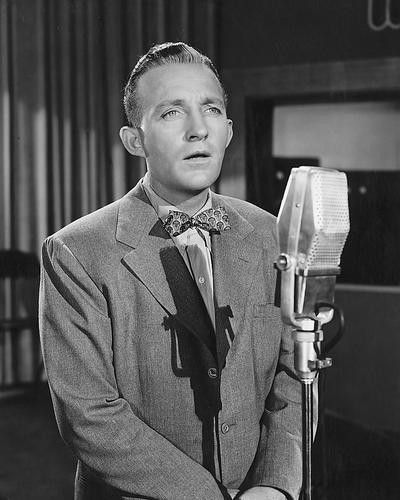
Fit like a’body. I hope you are all hale and hearty and most importantly, happy. So hello and a very warm welcome, friends, to The Happy Highlander’s Records — the programme where the crackle of shellac and the sound of a spinning gramophone take us back to the golden age of recorded music.
Today’s broadcast is a special one, because on the 3rd of May we celebrate the birthday of one of the most beloved voices ever captured on record: Bing Crosby, born on May the 3rd, 1903.
For this programme, we’re not simply playing famous recordings. Instead, we’re marking Bing’s birthday in the spirit it would have been celebrated during the 1930s and 40s — with personal recordings, birthday greetings, rare discs, and a glimpse into the friendships and recording culture of the golden era of 78-rpm records.
All today’s music comes from original shellac gramophone records, each with its own story — some commercial pressings, others deeply personal recordings never intended for wide public release.
We’ll hear birthday wishes for Bing Crosby, birthday songs by Bing Crosby, and even an extraordinary musical greeting from his great friend Louis Armstrong, recorded especially for him.
So wind up the gramophone, settle comfortably, and let us step back nearly a century… to celebrate the birthday of Harry Lillis Crosby — known to the world simply as Bing.
By the mid-1930s, Bing Crosby had become the most influential popular singer in the world. His relaxed microphone technique changed singing forever — moving away from theatrical projection toward an intimate conversational style made possible by modern recording technology.
A key moment came in 1934, when Bing signed with Decca Records in the United States. At a time when the recording industry was still recovering from the Great Depression, Crosby’s records sold in enormous numbers and helped establish Decca as a major force in popular music.

Decca’s American founder, Jack Kapp, believed records should feel personal and accessible — and Bing Crosby became the perfect ambassador for that idea. Together they shaped the modern popular record industry. Among Crosby’s closest musical friends was the great jazz pioneer Louis Armstrong — “Satchmo.”
Though their styles were different, they shared warmth, humour, and deep mutual respect. Armstrong admired Bing’s ease and timing, while Bing openly credited Armstrong’s rhythmic phrasing as an influence on modern singing itself.
Their friendship went beyond professional collaboration — as today’s recordings beautifully demonstrate.
And so, appropriately, we begin our birthday celebration with Bing Crosby himself offering a greeting many listeners will recognise…
We begin today’s birthday celebration with a rather fitting opening — a Decca recording featuring Bing Crosby together with the Ken Darby Singers. Now, this particular 78-rpm record is slightly unusual. On one side, it contains two songs pressed together as a continuous performance. The first is a short and cheerful rendition of “Happy Birthday,” which then flows directly into “Auld Lang Syne.” However, for the purposes of today’s programme — and in honour of Bing Crosby’s birthday itself — we’ll be listening only to the opening birthday greeting, stopping the record before it moves on to the New Year sentiments of Auld Lang Syne.
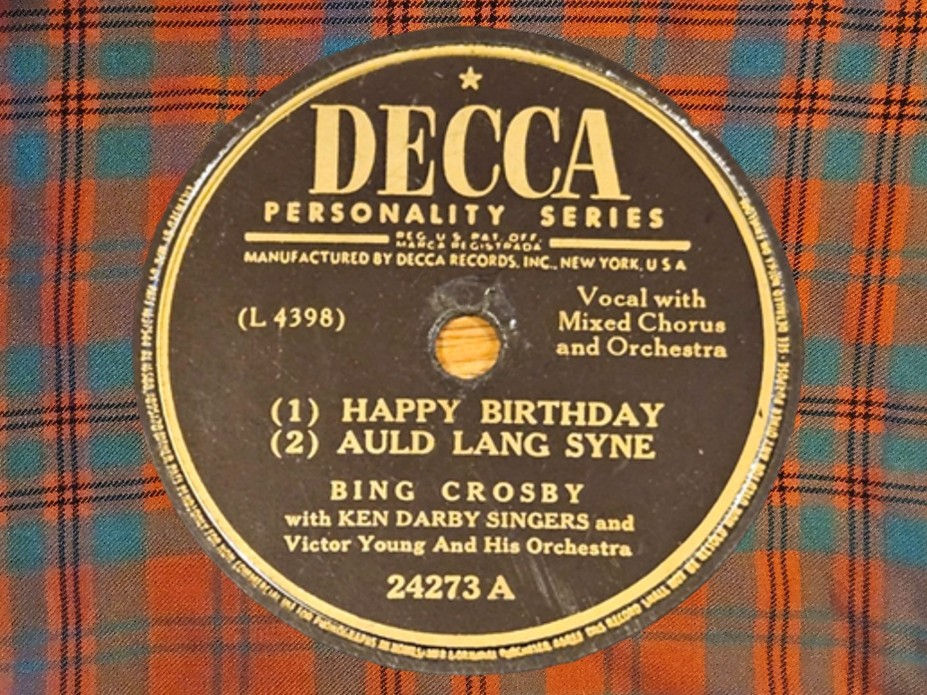
Record companies in the 1930s often created recordings like this for seasonal or celebratory use, allowing a single disc side to serve more than one occasion. It also reflects how records were used socially — played at gatherings, parties, and family celebrations rather than simply listened to in silence. The Ken Darby Singers, heard alongside Crosby here, were one of Hollywood’s finest vocal groups, frequently appearing in films and studio recordings of the era. Their polished harmonies provide the perfect backdrop to Bing’s effortless style — warm, informal, and wonderfully direct. Even in a brief performance like this, Crosby sounds less like an entertainer addressing an audience and more like a friend offering a personal greeting — which makes it a perfect way to begin our programme today. So, to open this special birthday edition of The Happy Highlander’s Records, here is Bing Crosby with the Ken Darby Singers, offering a musical birthday wish.

Our next record may be the most remarkable item in today’s programme. Recorded on the 2nd of May, 1939 — the day before Bing Crosby’s birthday — this features Louis Armstrong, singing and playing “Happy Birthday to Papa Bing Crosby.”

This was not a commercial release in the usual sense. It appears to have been recorded specifically as a personal birthday greeting for Bing himself — quite possibly a one-of-a-kind recording presented to him on his birthday, May the 3rd, 1939. Armstrong affectionately called Crosby “Papa Bing,” a nickname reflecting both friendship and admiration. By this time, both men were giants of American music, yet their relationship remained warm and playful. Armstrong’s gravelly voice, trumpet flourishes, and spontaneous humour remind us that early jazz was as much about personality as musicianship. You can almost hear the smile in the performance. In an era before video messages or instant communication, a personalised record like this was an extraordinary gift — music literally pressed into shellac as a birthday card. Let’s listen now to Louis Armstrong sending birthday wishes across time to his friend Bing Crosby.

For our next selections, we move into one of the more unusual corners of recording history. These are Tuck’s Gramophone Record Postcards — cardboard postcards with tiny playable records embedded directly into the card itself.

Produced mainly in the 1920s and 30s, they allowed people to send not just written greetings but spoken or musical ones through the post. Imagine receiving a birthday card that you could place on your gramophone and actually hear. Sound quality, as you’ll notice, was never the main selling point. The discs were small, lightly pressed, and wore out quickly — which is why surviving playable examples today are rather rare. This particular set originally contained four cards in a single envelope, though only two remain playable — titled “Birthday Greetings” and “Birthday Wishes.” They capture something wonderfully human about early recorded sound: the desire to make celebrations audible, personal, and shareable long before modern technology made such things commonplace. So here are two charming survivors from the novelty side of gramophone history.

Our fourth record brings us back to Bing Crosby — and to another deeply personal recording connected with Decca Records. The song itself, “The Girl With the Pigtails in Her Hair,” was a standard Bing Crosby recording. But this particular version is anything but standard. Here, Bing performs a specially rewritten version for Myra Joan Kapp, celebrating her seventh birthday on April 19th, 1939.

Between verses, we even hear spoken exchanges between Crosby and her father — Jack Kapp, founder of Decca Records in America. This recording beautifully illustrates how personal the recording world could be in the 1930s. Major stars sometimes made unique versions of songs for friends, colleagues, or special occasions — recordings never meant for mass audiences. Including this in today’s programme creates a lovely symmetry: just as Louis Armstrong recorded a birthday greeting for Bing Crosby, Bing himself did the same for others. It reminds us that behind the fame were real friendships, families, and moments of kindness preserved accidentally by history. Here is Bing Crosby with a very special birthday performance.
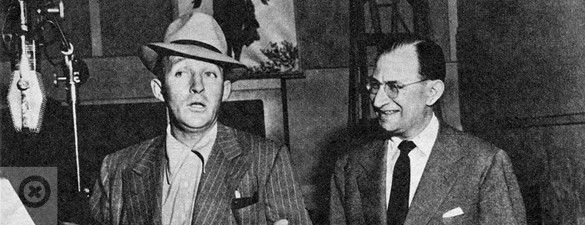
To conclude today’s celebration, we bring Bing Crosby and Louis Armstrong together on a commercial recording that perfectly captures their musical chemistry: “Gone Fishin’.”

When these two recorded together, the atmosphere was always relaxed and full of humour. Rather than competing styles, their voices complement one another — Crosby’s smooth baritone alongside Armstrong’s unmistakable gravelly warmth. Their collaborations showed audiences that popular singing and jazz improvisation could meet comfortably in the middle, helping bridge musical worlds and broaden popular taste. “Gone Fishin’” feels less like a performance and more like two friends enjoying themselves — which, in many ways, it was. And it seems a fitting way to end our birthday tribute: not with ceremony, but with companionship and music shared between friends. So we close this edition of The Happy Highlander’s Records with Bing Crosby and Louis Armstrong together.

And so, as the turntable slows and the last notes fade into the gentle sound of surface crackle, we come to the end of today’s birthday gathering for Bing Crosby. What makes these records so special is not simply the music pressed into shellac — but the friendships preserved within them. In the late 1930s, Decca Records was more than a business. Under its founder Jack Kapp, it became something closer to a musical family. Kapp believed records should feel personal — that the listener at home should feel included, almost as if the artist were singing just for them. Bing Crosby embodied that idea perfectly. Kapp trusted Crosby not only as a star, but as a friend. And Crosby, in turn, helped build Decca into one of the most successful recording companies in the world — not through grand gestures, but through warmth, humour, and an extraordinary ability to make every song feel like a conversation. And then there was Louis Armstrong. Crosby never hid his admiration for Armstrong. In interviews throughout his life, Bing openly credited Armstrong’s rhythmic freedom and relaxed phrasing as a revelation — proof that a singer could step slightly behind the beat and sound more human, more natural, more real. In many ways, the sound of modern popular singing began there, in the influence of jazz meeting popular song. Their friendship was genuine. When Armstrong recorded that birthday greeting for “Papa Bing” in 1939, it wasn’t publicity — it was affection. One great artist taking time to make another smile. And perhaps that is what this programme has really been about. Birthdays are not only markers of time; they are reminders of connection — of the people who sing to us, laugh with us, and leave small kindnesses behind.
So we have had the absolute joy of listening to a personalised record, a rewritten song for a child’s birthday, and two friends sharing a tune about going fishing… these moments show us the human side of musical legends. Bing Crosby once suggested in conversation that the secret of a good song was simple — it should make people feel comfortable and happy, as though they belonged to it. Listening today, nearly a century later, it’s clear he achieved exactly that. So on this 3rd day of May, we remember not just a famous voice, but a spirit of generosity and friendship that still spins every time a needle finds the groove. From Louis to Bing… from Bing to friends and listeners everywhere… the birthday song continues. This edition was recorded on an island off the West coast of Scotland where my collection of some 160,000 old shellac records is lovingly kept – to preserve, record and share these sounds from the past at 78rpm. You can listen to recordings of each individual record via my website TheHappyHighlandersRecords.com and also via my YouTube Channel Scottish Island Records. Thank you for joining me on The Happy Highlander’s Records. Until next time, keep your gramophones ready, your records well loved, and may every day bring a little music — and a little happiness — of your own.
Comments