


THE HAPPY HIGHLANDER’S RECORDS Episode 12 - Rare Voices of Remarkable Women
Updated: 4 days ago
You can watch the video episode here
(full of bonus images and slides with information in text form):
Or you can listen to the Audio Podcast here:
THE HAPPY HIGHLANDER’S RECORDS
Episode 12
Rare Voices of Remarkable Women

Fit like a’body. I hope you are all hale and hearty and most importantly, happy.
So hello and welcome, friends, to The Happy Highlander’s Records. I’m delighted you can join me for this very special broadcast: Rare Voices of Remarkable Women.
Today, we journey back through the grooves of history itself, through the crackle and warmth of old 78rpm shellac records, to hear the voices of women who shaped politics, public life, nursing, and social progress during the early decades of the twentieth century.
These are not merely old recordings. They are time capsules. Every scratch and hiss carries us closer to the actual sound-world of another age — an era when radio was young, gramophones stood proudly in parlours, and hearing the voice of a famous woman was still something remarkable and new.
Our first three records come from Britain’s historic General Election of 1929 — the first election in which women aged between twenty-one and twenty-nine were finally granted the right to vote, after decades of campaigning by Suffragists and Suffragettes. If you are interested to hear more, you can listed to Episode 9 which is a special edition about the Suffragettes.
Political parties quickly realised that women voters would play a decisive role, and gramophone records became a surprisingly modern campaign tool.
Today we shall hear women representing all three major political parties of the day: Labour, Conservative, and Liberal.
Then we cross the Atlantic to hear Margaret Woodrow Wilson — daughter of the American president — singing The Star-Spangled Banner in support of the Red Cross during the First World War.
And finally, we end with something truly extraordinary: a dramatic recording about Florence Nightingale which, at the end of the recording and for about one full minute, we hear the actual recorded voice of Florence Nightingale herself — one of the oldest surviving recordings of a historically significant woman.
So settle back, perhaps imagine the spinning turntable of an old wind-up gramophone, as we listen once again to the rare voices of remarkable women.
Our first record brings us to the Labour Party campaign for the General Election of 1929. The speaker is Margaret Bondfield — a pioneering figure in British politics and trade unionism. Born in Somerset in 1873, she began working life in a draper’s shop before becoming deeply involved in improving working conditions for women workers.

Margaret Bondfield was no stranger to breaking barriers. In 1923 she became the first woman appointed to the British Privy Council, and in 1929 — the very year of this recording — she became Britain’s first female Cabinet minister, serving as Minister of Labour. The title of this speech, The Women’s Opportunity, reflects the historic significance of the election. For the first time, millions of younger women could vote on equal terms with men. It was a political earthquake.
What is fascinating is that these election records were effectively the social media broadcasts of their day. Political parties issued them so voters could hear candidates and leading figures speaking directly in their own homes. And unlike modern polished media training, these recordings often sound wonderfully natural and direct. You can hear the cadence and confidence of public speaking from nearly a century ago.
One can also imagine families gathered around the gramophone, perhaps hearing the voice of a female politician for the very first time. Here now is Margaret Bondfield MP, speaking for the Labour Party in 1929: The Women’s Opportunity.

Our second record features one of the most fascinating political figures of interwar Britain: Katharine Stewart-Murray, better known as Her Grace the Duchess of Atholl.
Representing the Conservative Party, the Duchess of Atholl served as Member of Parliament for Kinross and West Perthshire in Scotland. She was one of the very few women MPs of her generation and became known for her intellect, independence, and formidable speaking ability.

Nicknamed “The Red Duchess” by some critics because of her outspoken views on education and social issues, she was never afraid to challenge her own party when conscience demanded it.
Her 1929 election address, The New Outlook for Women, reflects a Britain in transition. Women were entering public life in greater numbers, voting rights had expanded, and society was slowly redefining women’s roles beyond the Victorian expectations of the previous century.
There is also something wonderfully symbolic about hearing these campaign speeches today on shellac discs. Gramophone records themselves represented modernity and mass communication. Politicians were embracing technology to reach voters in a completely new way. And of course, these records had to fit onto just a few minutes per side — meaning speakers needed to be concise, persuasive, and clear. No lengthy speeches here! So now, from the Conservative campaign of 1929, here is the Duchess of Atholl with The New Outlook for Women.

Our third political record comes from the Liberal Party and features Mrs Wintringham — formally Margaret Wintringham — who holds a very special place in British parliamentary history. She became the Liberal Party’s first woman Member of Parliament when she won the Louth by-election in 1921.

At a time when women in Parliament were still an extraordinary rarity, she became an important advocate for education, public health, and social reform. Her speech is titled Politics and the Home, which captures one of the key political themes of the era: the idea that national politics directly affected everyday domestic life.
Today we often separate “home life” from “politics,” but after the First World War many women voters were especially concerned with housing, prices, employment, health, and education — issues that shaped family life every single day. It is worth remembering that women had only recently gained full voting equality in Britain. The Representation of the People Act of 1928 finally gave women the vote on the same terms as men.
So this 1929 election was the very first in which young women aged twenty-one to twenty-nine could fully participate. These campaign records therefore were aimed at an entirely new electorate — millions of newly enfranchised women hearing political messages directed specifically toward them.
And now, here is Mrs Wintringham for the Liberal Party, with Politics and the Home.

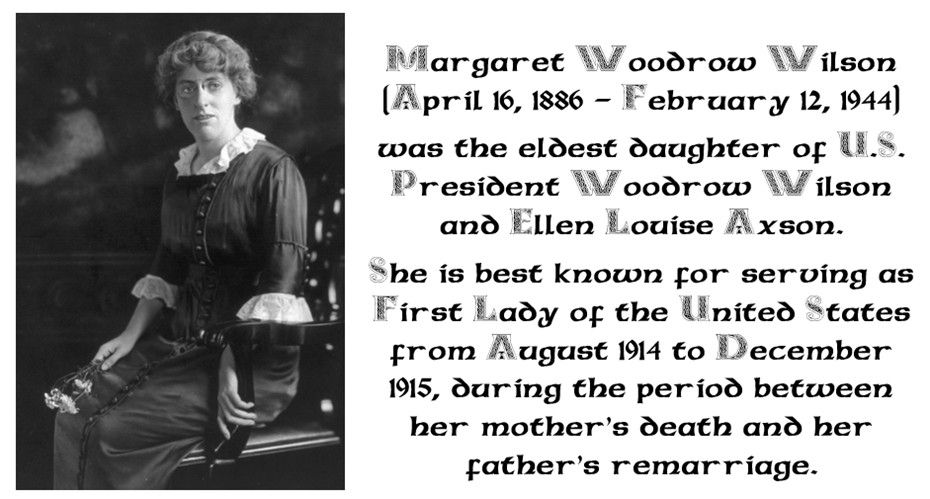
We now leave British politics behind and travel across the Atlantic to the United States. This record features Margaret Woodrow Wilson, eldest daughter of President Woodrow Wilson. During the difficult years of the First World War, she briefly served as First Lady after the death of her mother, before her father remarried. But Margaret Wilson was much more than a presidential daughter. She was also a talented singer and a supporter of women’s suffrage. The recording we are about to hear is especially touching because it was produced in aid of the American Red Cross during wartime. Copies of the record sold for one dollar, with proceeds supporting humanitarian relief.

At a time before television, celebrity charity records were relatively novel. Buying a gramophone disc could become an act of patriotism and public support. And unlike many modern studio recordings, these early discs were made acoustically — performers sang directly into a large recording horn before microphones became standard. It required enormous vocal power and control. So when you hear Margaret Wilson sing The Star-Spangled Banner, recorded in 1915, you are hearing not only a patriotic song, but also the sound of early recording technology at work. And perhaps somewhere, more than a century ago, this very record was played in an American household raising funds for wounded soldiers and war relief. Here now is Margaret Woodrow Wilson.
Our final record tonight is perhaps the most remarkable of all.
This dramatic production, Florence Nightingale — An Episode of the Crimea, features distinguished performers including Edith Evans, F. H. Grisewood, and the Wireless Singers Symphony Orchestra. The recording recreates scenes connected with Florence Nightingale and her legendary work during the Crimean War, where she transformed military nursing and became internationally famous as “The Lady with the Lamp.” But hidden within this recording is something extraordinary.

Around five and a half minutes into the performance, we hear the actual recorded voice of Florence Nightingale herself. To hear the voice of someone born in 1820 is genuinely astonishing.
Her recording was made late in her life using very early sound technology, and it remains one of the rare surviving examples of the voice of a major nineteenth-century historical figure. The emotional impact comes not only from what she says, but from the sheer immediacy of it.
Suddenly history no longer feels distant or abstract. A woman known from statues, portraits, and textbooks speaks directly across more than a century and now she is speaking to you.
And perhaps that is the magic of old records. They do not simply preserve music or speeches. They preserve human presence. So for our final selection tonight, here is Florence Nightingale — An Episode of the Crimea.

And so we come to the end of today’s episode and our journey through Rare Voices of Remarkable Women here on The Happy Highlander’s Records.
In this episode, we have travelled across nearly a century and a half of history — from the battlefields of the Crimea, to the suffrage movement, to the election campaigns of 1929, and onward to the patriotic songs of the First World War.
What unites all these women is not simply achievement, but courage: the courage to speak, to lead, to serve, and to be heard in times when women’s voices were too often overlooked.
This edition was recorded on an island off the West coast of Scotland where my collection of some 160,000 old shellac records is lovingly kept – to preserve, record and share these sounds from the past at 78rpm. You can listen to more episodes via my website TheHappyHighlander.com and you can also listen to recordings of each individual record via my YouTube Channel Scottish Island Records.
These old shellac records may be fragile, but the spirit captured within them is anything but fragile. Every crackle of the gramophone needle reminds us that history is not silent. It lives through voices — voices preserved against all odds, waiting patiently for new generations to listen.
And perhaps that is the enduring happiness hidden within these old records. Voices may grow faint, shellac may crack, and generations may pass — but courage, hope, and humanity still shine through.
As Helen Keller once said: “Keep your face to the sunshine and you cannot see the shadows.”
Today we have heard women who helped bring that sunshine into public life — through politics, service, music, reform, and determination.
Thank you for joining me on The Happy Highlander’s Records. Until next time, keep listening closely to the past — and happily.

Comments